Showing posts with label poetry binders. Show all posts

Wednesday, March 4, 2026

March Poems and Songs for First Grade: Low-Prep Poetry Binders That Build Fluency All Month Long

March in first grade is BUSY.

We’re celebrating St. Patrick’s Day, diving into Read Across America, noticing rainbows, flying kites, talking about wind, and welcoming spring. And in the middle of all of that, we still need meaningful, consistent reading practice.

March Poems and Songs Fluency Practice

That’s exactly why I love using my March Poems and Songs Poetry Binder (Google Slides + Printable PDF). It gives my students short, high-impact reading passages that we can revisit all month long without adding one more overwhelming thing to my lesson plans.

Why Poetry Binders Work So Well in March

Poetry Binders Provide Fluency Practice. Meaninful Learning

If you ever feel like there just isn’t enough time for fluency practice, poetry binders are the solution.

They:

  • Encourage phrasing and rhythm through predictable patterns

  • Build fluency through repetition

  • Support sight word recognition in meaningful context

  • Increase confidence and expression

Because poems are short and engaging, students reread them often. That repetition builds automaticity without feeling like “drill.”

And in March? Engagement is everything.

What’s Included in the March Poems and Songs Packet

20 March Poems Thematic First Grade

Each March packet includes:

  • 20 monthly thematic poems and songs

  • Monthly dividers to keep your binder organized

  • Printable PDF format

  • Google Slides for projecting, centers, or remote learning

Themes include:

  • St. Patrick’s Day

  • Read Across America / Dr. Seuss

  • Rainbows

  • Kites

  • March wind

  • Early spring fun

It’s all ready to print or project . Forget about scrambling for last-minute poems. I'm way over that!

The Magic Is in the “Noticings”

March Poems Learning Opportunities First Grade

One of my favorite parts of using poetry daily is what my students notice.

During one poem, someone spotted the words “don’t” and “I’ll.” That led to a mini-lesson on contractions.

Another time, a student noticed that a poem was simply describing green things. Immediately, we asked: “Can we write our own color poem?”

Poetry becomes:

  • A phonics lesson

  • A grammar mini-lesson

  • A writing mentor text

  • A vocabulary discussion

All from one simple page.

Perfect for Fluency, Buddy Reading, and Do-Nows

Poetry Binders Fluency Buddy Reading Do Nows


Our Poetry Binders are a quality Do-Now and perfect for Fast Finishers.

In my classroom, buddy reading with poetry binders is a favorite. Students:

  • Echo read

  • Take turns reading lines

  • Choral read

  • Perform for partners

It’s structured. It’s predictable. And it builds confidence. I even let them bring them home once a week to show off for their family and friends!

Ways to Use March Poems and Songs in Your Classroom

You can keep it simple or stretch it in so many directions. (NOTE: There are plenty of poems we just read and ENJOY it. No lessons.  No connections.  That's important!)

Literacy Centers & Independent Work

  • Reread, illustrate, and highlight sight words

  • Word hunts for rhyming words, blends, digraphs, or contractions

  • High-frequency word review

  • Punctuation practice

  • Phonics pattern searches

  • Illustration activities to visualize imagery

Reading & Fluency Practice

  • Fluency rereads for automaticity

  • Buddy reading

  • Choral reading

  • Echo reading

  • Performance reading

Comprehension & Vocabulary

  • Retell and discuss theme or author’s purpose

  • Define tricky vocabulary

  • Make text-to-self or text-to-world connections

  • Practice simple inference

  • Sequence poem lines

Writing Inspiration

  • Poetry imitation (write your own version!)

  • Sentence expansion with new adjectives or verbs

  • Seasonal journal prompts

  • Creative responses

Music, Movement & Drama

  • Add rhythm sticks or clapping

  • Create motions to match key lines

  • Sing poems to familiar tunes during Morning Meeting

  • Act out imagery

Cross-Curricular & SEL Connections

March themes naturally support:

  • Science (weather, wind, spring changes)

  • Social Studies (holidays, traditions)

  • SEL (kindness, feelings, courage)

What Teachers Are Saying

Teachers love poetry binders


“This was a great addition to our morning meeting and the students had so much fun practicing their fluency every morning.” – Grade 1 Teacher

“My students love these poems and are highly engaged in reading and practicing decoding and fluency. I love that I can quickly choose the poems I want to use and it is ready to go.” – Grade 1 Teacher

“This has saved me so much time looking for monthly poems to support our curriculum.”

That time-saving piece? It matters.

Save Time with the Yearlong Bundle

Year Long Poetry Thematic Bundle Primary Grades


Purchasing the Poems and Songs Bundle saves you hours of searching for the perfect poem to match holidays, curriculum, and special events.

You’ll save $10 which is like getting two monthly packets FREE.

And don’t forget:

September is already FREE for you to sample.

No guesswork. No wondering if it will work in your classroom. You can try it first.

Try It for Free

September Poems for FREE


  • 20 FREE Poems

  • Download Now

  • Low Prep

  • Enhances Your ELA Program

If March feels long…
If fluency practice keeps slipping…
If you need something structured but joyful…

This is it.

Short.
Engaging.
Repeatable.
Powerful.

Don't forget to download your FREE September poems today.  Enjoy!

Saturday, October 25, 2025

How I Taught One Teacher to Love Poetry

About 10 years ago, a new teacher walked into my room and looked at the poem up on my projector. She rolled her eyes.  "I HATE poetry!" 

😖Hate poetry?  Eek!

Then she explained. "My Second Grade teacher made us memorize about 30 poems a year."

Ohhhhhh. Now I got it.

I’d probably hate poetry too if I’d been forced to memorize poem after poem!

Over the next few months, I started sharing my poems, philosophy, and favorite poetry activities with her. Little by little, something changed. She began using poems to support her readers and connect to other parts of the curriculum. And soon, she loved the poetry binders her students couldn’t get enough of.

And the best part? I learned from her, too. Her feedback and fresh perspective gave me new ideas I hadn’t thought of before.

A New Way to See Poetry

In my classroom, we use poems almost every day but not in the drill-and-kill kind of way. Here’s what I learned early on:

Don’t dissect every poem or turn every poem into a lesson.

When poetry becomes “work, work, work,” students lose the joy.
Instead, we read poems for many reasons but mostly to enjoy them.
To soak in the rhythm, rhyme, wordplay, and imagery.

Sometimes I teach from a poem, but usually it’s because of what students notice and wonder about on their own. And believe me, there are soooo many noticings that happen in a first grade classroom!

Why I Make Time for Poetry (Even When There’s No Time)

Like you, I have limited minutes in my day.

So I’m always looking for lessons that can double, triple, or even quadruple dip into other curriculum areas and poetry is it!

Poems can build:

  • Fluency

  • Phonics and vocabulary

  • Comprehension

  • Writing inspiration

  • Social-emotional connections

And best of all, they invite students to play with language. That's something every young learner needs more of.


Here are a few examples of the students' "noticings" that led to a short mini-lesson.

What do students notice about the poem? Let them  dictate the mini-lesson need.
By the end of the year, about 90% of my students say their Poetry Binders were their favorite part of first grade.

I think it’s because they get to Buddy Read the poems, revisit old favorites, and enjoy them anytime throughout the day.

Those binders build reading confidence. That’s why, year after year, my little ones name our poems as one of their favorite memories and classroom activities.


Every teacher uses poems in different ways.  Here are all the ways I have used them throughout the year.  Some of these I use all of the time. Others? Maybe it just fit my needs once or twice.

Using Poems in the primary classroom for Literacy Centers Poetry center – reread, illustrate, and highlight sight words. Word hunt – find rhyming words, blends, digraphs, or contractions. High-frequency word review – highlight weekly sight words within poems. Punctuation practice – identify commas, periods, exclamation marks. Phonics focus – search for specific spelling patterns or vowel teams. Illustration activity – visualize imagery by drawing matching pictures.

Using Poems in the Primary classroom to increase Fluency practice – rereading familiar poems builds automaticity. Buddy reading – partners take turns or echo read. Choral reading – read poems together as a class or small group. Echo reading – teacher reads a line, students repeat with expression. Performance reading – students “perform” poems for the class or families.


Using Poetry in Primary Classroom to Retell and discuss – talk about the meaning, theme, or author’s purpose. Vocabulary notebook tie-in – define tricky or new words. Making connections – text-to-self, text-to-text, or text-to-world links. Inference practice – guess feelings or hidden meanings from clues. Sequencing – arrange poem lines or stanzas in the correct order.

Using Poems in the Primary Classroom for Writing Center Inspiration by Poetry imitation – students write their own version using a similar pattern. Sentence structure practice – rewrite lines using new adjectives or verbs. Seasonal writing prompts – use poems to spark journal entries. Copywork for handwriting – neat writing of a short, meaningful text. Creative response – students draw, write, or collage their interpretation.

Using Poetry Binders or Folders in the classroom for Music, Movement and Drama by Add rhythm or instruments – read with clapping, tapping, or rhythm sticks. Poetry with motion – create hand motions to match key words or lines. Poetry songs – set poems to familiar tunes for morning meetings. Dramatic readings – act out imagery or emotions from the poem.

Using Poems to Home–School Connection Take-home fluency practice: send binders home weekly for reading aloud. SEL Tie-Ins  Use poems about kindness, courage, or feelings for discussion. Cross-Curricular Support Science or social studies poems: reinforce units like weather,  animals, or community helpers.

I've sold thousands of my poetry packets and bundles. They have a proven track record.

Reviews for Using Poetry Binders, Folders, or Poems in the Classroom


Still not convinced poems fit into your day or vision for your classroom?  Try this set for FREE!
Free September Poems for the Primary Classroom

If you end of loving what it adds to your classroom, you may want to invest in the BUNDLE of Monthly Poems.  A great value especially knowing that you can use the poems (PDF or Google Slides) over and over again.

If you haven’t tried poetry in your classroom yet, start with just one poem. See what your students notice, what they laugh at, what they remember. Then come back and tell me how it goes. I’d love to hear all about it!💛


Saturday, July 5, 2025

Why Poetry Belongs in Every Classroom

I got an email on Tuesday asking me why I'm so passionate about using poetry and songs in the classroom.  I pulled together my Top 10 reasons why I think using poetry binders in my First Grade classroom is beneficial:

1. Builds Early Literacy Skills

  • Encourages fluency, phonemic awareness, and vocabulary development.

  • Provides repeated exposure to high-frequency words and patterns.


2. Promotes Reading Confidence

  • Poems are often short and rhythmic, making them approachable for young readers.

  • Repetition and predictable structures help build self-assurance.

3. Enhances Listening and Speaking Skills

  • Reciting and performing poems improves oral language skills.

  • Encourages expressive reading and articulation.


4. Supports Memory and Retention

  • Rhyming and rhythm aid memorization.

  • Helps students recall language patterns and content.

5. Encourages Creativity and Imagination

  • Sparks interest in wordplay, imagery, and storytelling.

  • Inspires students to create their own poems.


6. Creates a Personal Reading Resource

  • Students can revisit poems independently, building a sense of ownership.

  • Acts as a growing portfolio of literacy progress throughout the year.


7. Facilitates Cross-Curricular Connections

  • Poems can align with science, social studies, or seasonal themes.

  • Reinforces concepts through engaging language.


8. Strengthens Home-School Connection

  • Students can take binders home to read with family.

  • Encourages literacy outside the classroom.

9. Fosters Classroom Community

  • Shared readings of poetry promote a sense of belonging and shared learning.

  • Class favorites can become part of daily routines or transitions.


10. Supports Differentiated Instruction

  • Binders can be customized with poems suited to individual reading levels or interests.

  • Provides an accessible entry point for struggling or emerging readers.

There you have it!  Thinking of starting a poetry binder this year? Here are 20 FREE poems to get you started. Have fun with them  Enjoy!!!


Saturday, June 21, 2025

Why Did I Wait So Long?! The Poetry Binder Hack That Saved My Sanity

I've finally figured out a classroom poetry binder system that actually saves me time—and I’m kicking myself for not doing it sooner! If you’re a teacher looking to simplify monthly poem organization, you’re going to want to try this.

The Struggle Was Real

Every month, I’d print out our classroom poems, pass them out, and watch 20 tiny humans try to line them up with the three rings in the binders.  Of course I'd help but by the time I got all the way around the room, poems were upside-down, backwards and out of order. 😅

I did this September-June!  Every. Single. Month..

I thought I was doing things efficiently. I really did.

Spoiler: I was not.

Enter: My New Binder System

This year, I did something wild — I printed the entire year's worth of poems ahead of time. Yup. All of them. Double-sided. Sorted by month. Dividers which were simply labeled, "September Poems, October Poems, etc. included.

I handed out binders in September and said to my colleagues, “I'm done.” And guess what? I really was!

Here's What I Do Now

  • Copy/paste just the poems I want into one master document (Thank you, Google Slides link in my TPT packet ).

  • Number every poem so we can find them quickly

  • Print double-sided and sorted by month (include Month dividers!)

  • Put into binders just ONE TIME!

  • Done and done.


Bonus: A Google Slides Shortcut!

If you're using my TPT poetry packet, grab the Google Slides link. I just drop the poems I want into one doc, and it's way easier to edit and prep for print. Then when I'm introducing a poem, no more scrolling. They are in the exact order I need them and display perfectly on my projector.  (I also have PDFs included which I used for display for years.  But while helpful, not ideal.  Slides much better!)

Seriously, Try It

I feel like an idiot for not doing this sooner — but also like a genius now. 😂 If you're still doing the month-to-month chaos, consider giving this full-year method a try. It’s honestly one of the best time-saving shifts I’ve made.

And don't forget, my September Poetry Packet is FREE!  


Wednesday, October 5, 2022

Fire Prevention Week Activities (October 9-15th)

Are you looking for some ways to reinforce Fire Prevention Safety in a meaningful way that doesn't suck up hours of your planning time or instructional time?  I have some simple ideas for you!
When I was teaching Second Grade, I was going to give a quick mention of Fire Safety Week and move on. But a Firefighter friend of mine told me to ask my 7 year olds the above question.  Not one student answered with the correct answer: ONE. Oh boy...there was work to be done!

If you subscribe to Scholastic News, I suggest starting there. 


If you do subscribe, I hope you're taking advantage of the fabulous online content. Top notch. You also get access to all of the older editions throughout at least the last five years. That means the videos, games, etc. Here are the back issues I saw yesterday.

The Fire Tech tools is one I'll be revisiting this year. If your school has funding available and you're not yet a subscriber, I promise you it's well worth the price. You get 4 "magazines" a month. Each child will get to bring home their own copy. Then of course, the online access which I use all the time.


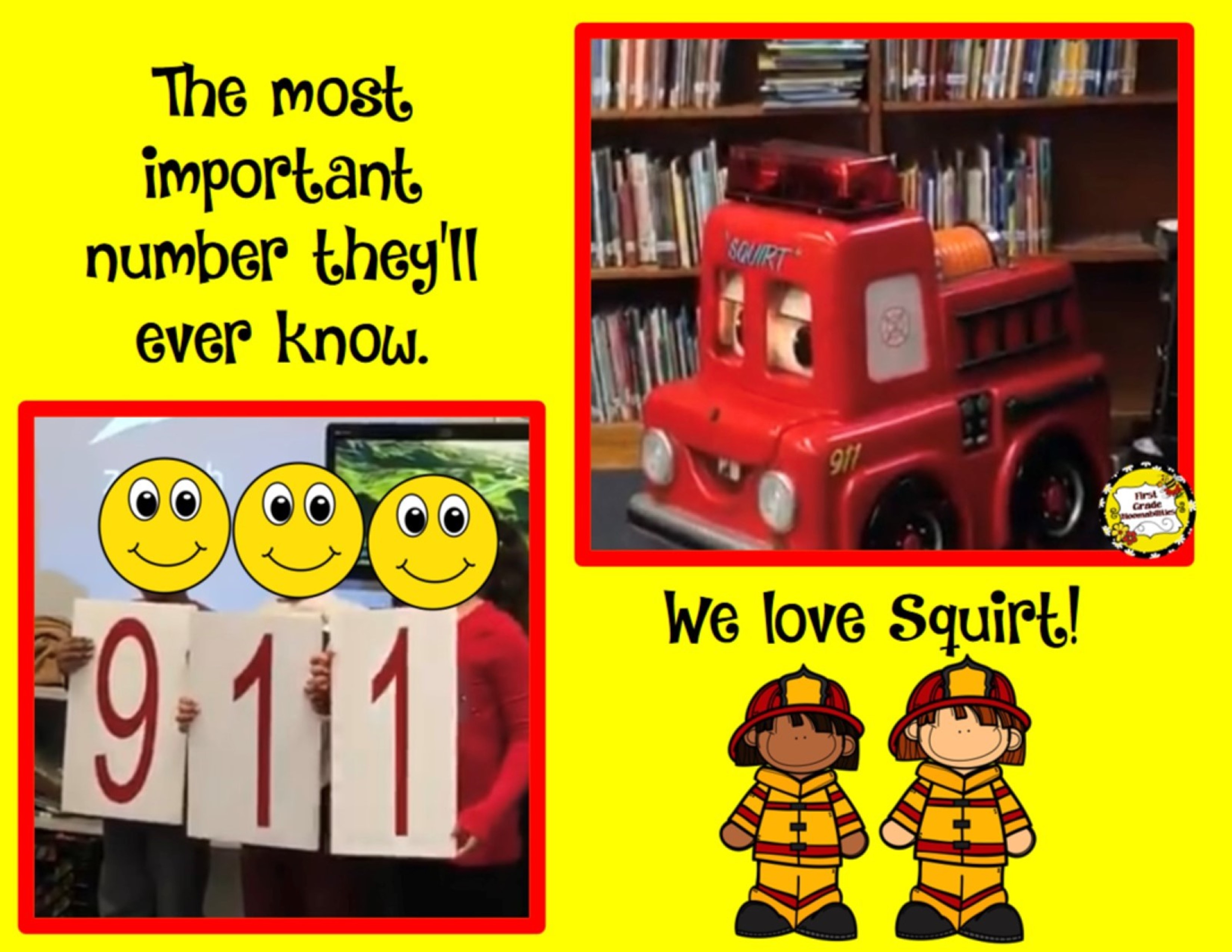
We often have Fire Fighters come to visit the students.  Most of the time, they bring the truck but while fun and a cute photo op, I think it's best left to the Kindergarten classes. I think it's way more important to have them speak to the kids and introduce/review the importance of Stop, Drop and Roll as well as calling 911 when needed.  Our department brings SQUIRT who answers questions and interacts with the kids. 

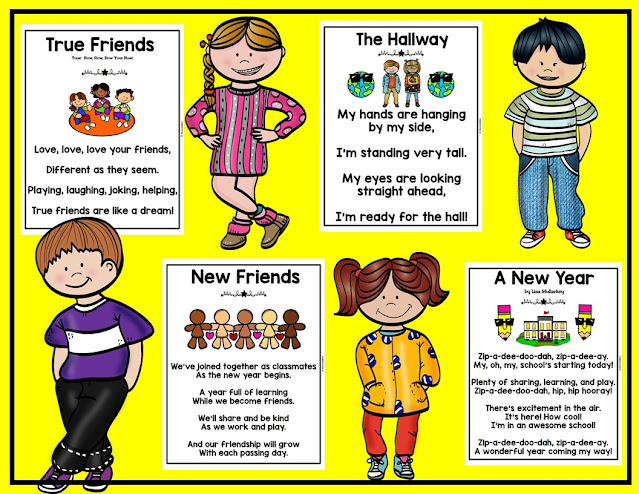
After the visit, I have two poems that I like to use to reinforce the lesson shared.


I'm big into Poetry Binders so we add these to them and sing often! Read about a fun way I incorporate poems into my classroom via a Poet Tree! 

Of course I have books available to share with the kids and let them look through. I don't read all of them but do make sure they are easily accessible to the kids.


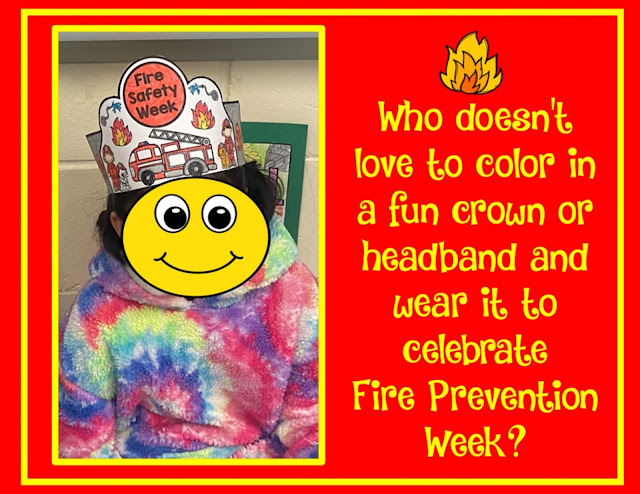
I usually have the kids make a headband / crown when the Fire Fighters visit. The kids make it as their Do-Now one morning so it's a quick activity.  It's also a good visual reminder to parents to continue the convo at home when they see the kids coming off the bus wearing them.


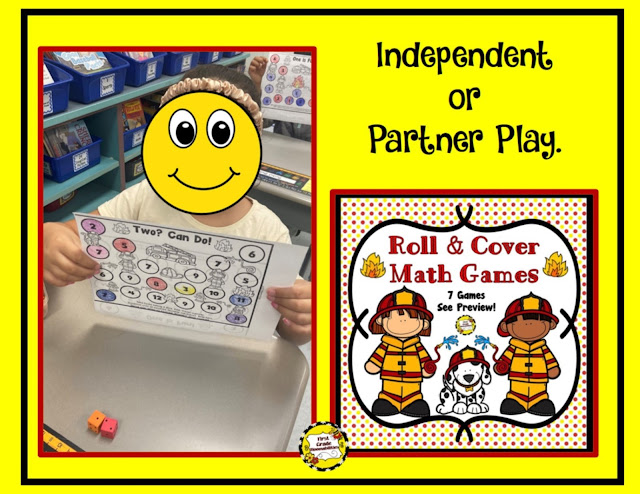
Another Do-Now (Which is done in the morning after arrival but before I take attendance and school officially starts) is to play a simple, Roll and Cover game.  I just added graphics to support the week but really a basic game. I have them play with a partner. Usually when someone wins one of our games, they pop up and yell, "Winner, winner chicken dinner." In the case, they pop up and yell out, "Stop, Drop and Roll."


Another tried and true activity...Origami Dalmatian Dogs that take under five minutes.

 I like to hang them around a "Fire Fighters Are, Can, and Have" poster we make together. In the past, I had them list a prevention tip or piece of advice on the back to share with the class and their families.


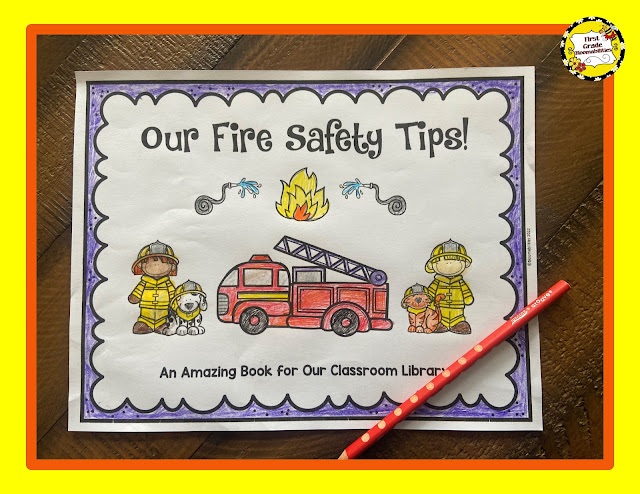
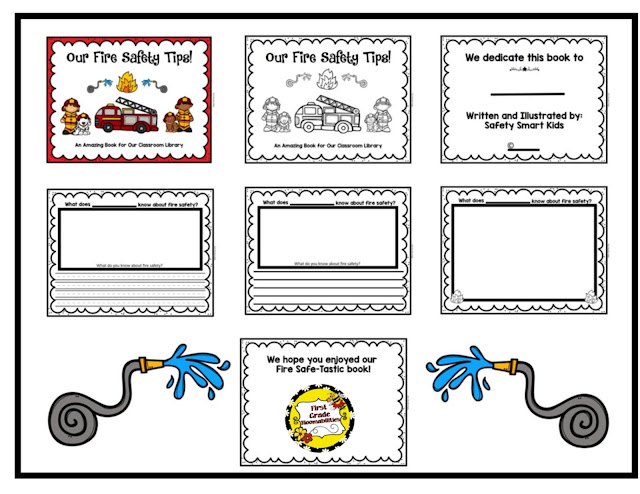
But this year, I'm going to add to our class library and have everyone contribute one page to a class book.  There is a pre-made cover that you can print or have a student color in the page.  (Note: I make these all year long, place in library and at the end of the year, each students gets to take home two of the class books. A great memory!)


Each booklet (Five booklets for each month) comes with lines paper or simply a drawing space for those not yet writing.  Honestly, I let them pick the one that is best for them. Most kids used the lines paper but I usually have 3-5 opt for drawing only.


I added these class books to my store recently. There are 5 books per month. Check out my October Books if interested.
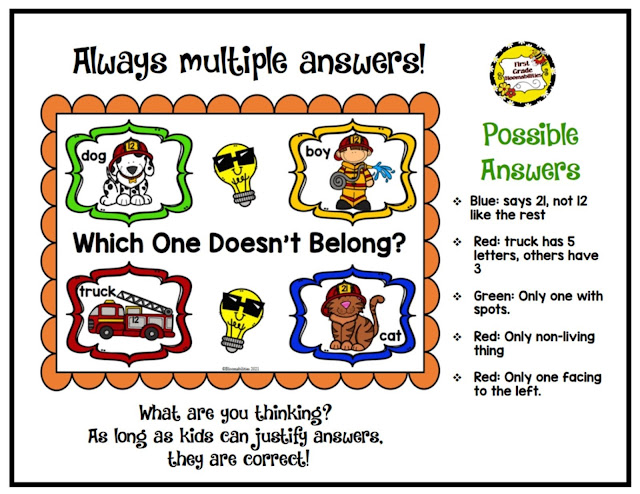
If you know me, you know that I LOVE Which One Doesn't Belong OPEN-ENDED activities. There are always MULTIPLE ANSWERS. I use them for a five minute filler activity, a Morning Meeting Activity, during math (when I'm using my math focused one) and as Do-Nows, too.  One included in my October packet has a Fire Fighter theme. To see these in action, take a peek at my video of the students sharing answers or a blog post showing answers. Hands down, my kids favorite activity.


Here are some FREE Which One Doesn't Belong? slides for you to share with your class. I'm sure you will be amazed at their thinking. 

I hope you were able to get some ideas for Fire Safety Prevention Week here. Are there any you're planning on trying? Let me know.